If you prepare dinner a good deal, you learn to read a pan the means a wood worker reads grain. You experience how easily it wakes up over a medium flame, you become aware of the halo wherein butter melts first, and you know whilst a skillet will hinder searing even once you drop a chilly steak. That rhythm comes all the way down to warmness switch and heat distribution, not manufacturer gloss. I have spent satisfactory time transferring pans between house stages, moveable induction tops, and restaurant burners to realize that structure subjects extra than advertising and marketing. So whilst persons question me approximately David Burke Geo Clad vs HexClad, they may be highly asking two questions: which one gets to temperature rapid, and which one spreads warmness extra flippantly across the cooking surface?
Let’s unpack that with precise supplies, truly geometry, and it slow on the stove.
What each pan honestly is
David Burke Geo Clad is characteristically an absolutely clad stainless steel line with an aluminum center. The “Geo” refers back to the outside texturing, a geometric development that provides grip and scuff resistance. The principal bit is the sandwich: stainless inside and outside for longevity and induction compatibility, aluminum within the midsection for conductivity. In most clad cookware, that conductive layer runs up the sidewalls, now not simply throughout the bottom, which stabilizes simmering and decreases warm spots close to the rim.
HexClad takes a exclusive course. Its signature is the hybrid surface, a laser-etched mesh of raised stainless “hex” ridges over a nonstick layer. Under that surface, HexClad uses a tri-ply trend build with an aluminum core bonded to chrome steel. The raised metal protects the nonstick valleys, supplying you with a semi-slick surface that tolerates steel utensils. In short, HexClad attempts to vow two worlds in one pan: more effective browning than vintage nonstick, and more convenient free up than bare stainless.
Under the hood, each depend upon aluminum to go warm. Aluminum conducts roughly 4 times speedier than 18/10 stainless, that's why natural stainless skillets are uncommon for serious cooking. The questions are, how lots aluminum do they use, in which is it positioned, and what does the surface development do to sensible warmness habit?
How speed and evenness in actuality work
A pan heats right now whilst it has low thermal mass relative to the warmth it is able to pull in. It spreads warmth frivolously whilst the conductive layer is thick and steady across the base, and when the floor, contact with the burner, and shape don’t introduce bottlenecks. The variables you can’t see in a advertising image are thickness in millimeters, how wide the aluminum layer extends, and the flatness of the base.
The most efficient look at various is the towel-and-sugar or oil-swirl try, not a thermometer put in a single spot. Oil will tell you the reality. When I overview, I set 3 burners: a mid-drive gas burner round 9,000 to 12,000 BTU, an electric powered coil, and a 1,800-watt induction sector. Then I time three moments: when the first shimmer looks, whilst the complete surface presentations a uniform shimmer with no naked patches, and how the pan responds once I upload a chilly aspect.
Head-to-head on an ordinary dwelling house gas burner
With a 10 or 12 inch skillet dimension, either brands arise to temperature in a equivalent window, however they differ in how they behave throughout the time of that first minute of cooking.
The Geo Clad, in my expertise, reaches a light oil shimmer on medium-excessive gas in roughly 90 to 120 seconds for a ten inch pan. That tracks with a mid-weight 2.5 to 3 millimeter clad construct. The distribution feels like a gentle gradient from heart to area, which means the midsection gets there first, but inside of an alternate 20 to 30 seconds the sides capture up. If you drop onion slivers in a circle, you spot a few added sizzle at the hub for a heartbeat, then the ring evens out.
HexClad on the identical burner frequently takes about the similar time to attain the 1st shimmer, once in a while a hair faster on the spot desirable over the flame. But the hybrid surface variations the visual: tiny beads type across the raised ridges, then join. The full, even sheen across the floor occasionally lags at the back of the primary shimmer by an extra 20 to 40 seconds. That hole is not very dramatic, but for those who’re chasing quick tortillas or crepes, that lag topics. The ridges a little insulate the valleys at the start, delaying uniformity. Once it stabilizes, it chefs flippantly ample for maximum duties.
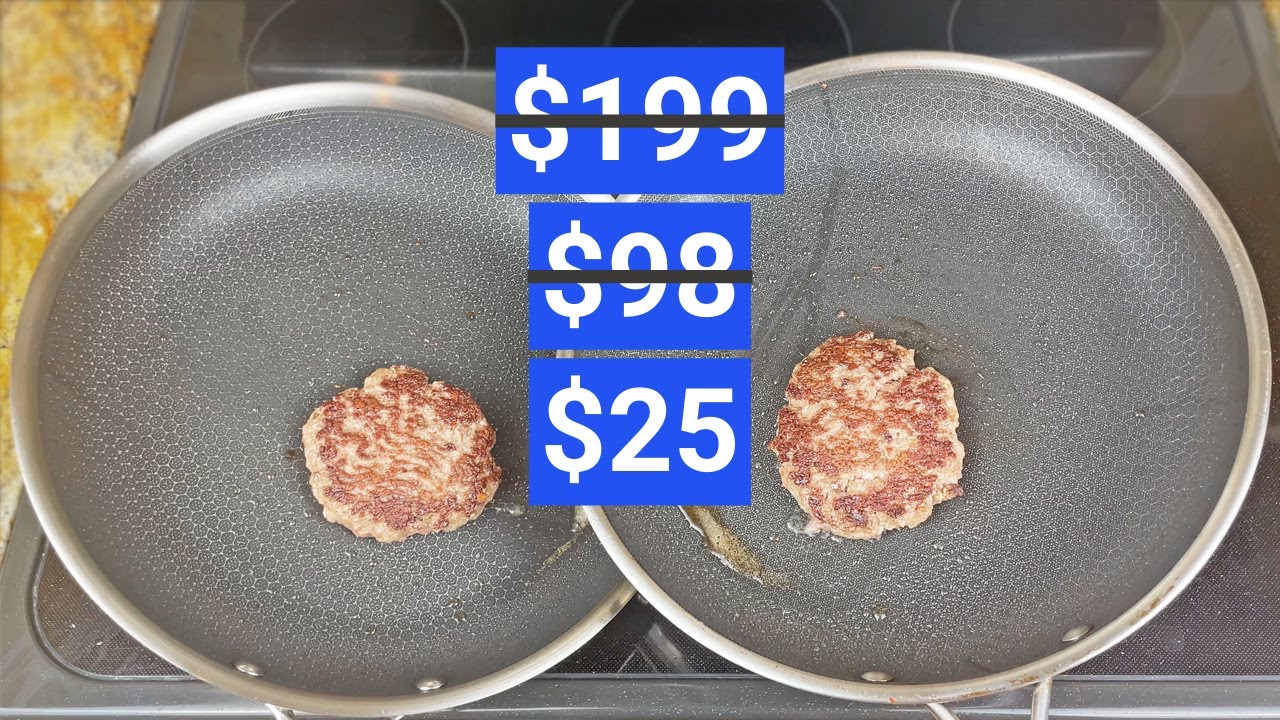
For searing, the Geo Clad shows a delicate Maillard spread. Sear strains cross outward predictably, which allows with consistent crust on a red meat chop or a burger. HexClad produces an honest sear too, however with a delicate grid sample in the event you press early. After 90 seconds, that evens out, and the crust seems to be well-known. The difference is about self assurance. On stainless, you read the fond and the oil honestly. On the HexClad microtexture, it takes a couple of sessions to consider what you’re seeing.
On induction, the place evenness is won or lost
Induction amplifies design possible choices. The coil excites a disk-shaped quarter within the base. If your conductive layer is skinny or patchy, you get a ring-hot, midsection-cool position.
Here, Geo Clad has an part. A completely clad aluminum center that runs throughout the base and up the walls acts like a single plate that diffuses coil warmness right away outward. In oil, you notice very nearly no cold ring beyond the induction footprint as soon as the pan equilibrates. In aspect-by using-aspect omelet checks at medium potential, Geo Clad spreads butter uniformly within about 20 seconds of preliminary soften.
HexClad is induction well matched because of the immaculate outside, however the hybrid floor and the precise geometry of its center appear to sluggish lateral diffusion only a contact. Butter melts rapid over the coil, then creeps to the perimeter extra slowly. You can manage that by preheating fifteen seconds longer, but if we're grading basically on evenness without system ameliorations, Geo Clad lands steadier.
If you simmer sauces on induction, that balance can pay off. Tomato sauce will burp lightly around the rim in Geo Clad, while HexClad has a tendency to David Burke Geo Clad vs HexClad Cookwarereviewhub.com choose the energetic coil region except you provide it a stir every minute or two.

Electric coil and glass desirable realities
Electric factors introduce every other problem: touch satisfactory. If a pan bottoms out lifeless flat, you get constant move. If the bottom has a moderate convex or concave profile, warmness concentrates.
Most Geo Clad items I actually have dealt with arrive with a properly machined, flat base. That interprets to predictable heating on glass tops. HexClad bases are also induction-equipped and repeatedly flat, however the micro-etched floor on the cooking facet does not anything for touch at the stove edge. Any small warp from overheating shows up quick on electric powered, and either brands will punish you in the event you surprise them (bloodless water on a scorching pan). In long-term use, I actually have noticeable extra customers file mild wobble with lighter hybrid pans whilst overheated. That isn't very a dig at HexClad on my own, just a reminder that any tri-ply skillet prefers sluggish cooling.
Surface texture and what it does to warmth transfer
Slickness and ridges count number in view that touch place drives how warm leaves the metal and enters your delicacies. Bare stainless has complete contact, which speeds initial sear and evaporation. HexClad’s raised stainless grid reduces the contacting section just a little. That restraint can support with eggs and fish, considering that the valleys supply steam and fat a path to break out with out sticking. For natural heat move, however, the grid ability you generally desire a notch greater preheat to equivalent the browning velocity of a easy stainless floor. Think of it as practicing wheels for release, not a turbo for warmth.
Geo Clad’s internal is basic stainless, so it rewards preheat discipline. Let a droplet skate earlier you upload oil, drop warm a notch, then add nutrients. Do that, and protein sticks calmly before everything, then releases naturally once the Maillard layer varieties. If you bypass the preheat, it is easy to combat sticking, and any pan will appear “asymmetric” because the foodstuff anchors at the first hot spot.
Thickness, weight, and factual-global timing
Without micrometer measurements throughout the comprehensive product ranges, you pass by way of coping with and cook dinner times. Mid-weight tri-ply pans within the 2.2 to 3 millimeter whole thickness differ tend to warm to a 350 to 375 F floor in ninety to one hundred fifty seconds on a regular home burner. Heavy five-ply pans can take 2 to a few mins, then retain warmness like a champ. Most HexClad and Geo Clad skillets I’ve used sit down in the mid-weight camp. That explains the similar time to first shimmer.
What separates them is what occurs in the event you upload bloodless nutrients. Drop a pound of forty F rooster pieces. Geo Clad drops in temperature, then recovers gradually. The sizzle dips for two or three beats, rebounds, and stays while lengthy as you withstand overcrowding. HexClad dips a little extra in sound on my own, since the textured floor spreads oil another way. The food nevertheless browns, however you pay attention the ridge-valley impression. Give HexClad ten excess seconds and it catches up.
Now try out a steak. Cast iron still wins for competitive crust, yet among these two, Geo Clad provides a a little bolder first-side sear. HexClad gets there, with much less probability of bonded protein, but you steadily need a tiny bit extra patience in the past the flip.
Tests you could run at home
If you wish to compare your very own pans devoid of lab apparatus, are attempting 3 brief sporting activities. I use them when consulting for small kitchen groups shifting to induction.
- Dry flour attempt: Dust a pinch of flour lightly across the dry pan over medium warmth. Watch which locations tan first. With precise evenness, the browning spreads in a glossy wave in preference to blotches. Oil bead race: Add a teaspoon of impartial oil to a chilly pan, then warmness to medium. Note the place beads shape, split, and movement. Uniform beading indicates even temperatures. Onion ring walk: Lay a skinny ring of onion slices simply inside the rim in a preheated pan with a skinny oil film. If the hoop chefs at all times with minimum gaps, the sting zones are protecting up.
None of those wreck a pan, they usually teach you ways your targeted burner and cookware pair.
The role of lids, sidewalls, and pan shape
Evenness is just not in basic terms about the bottom. If you stir-fry or sauté, the sidewalls rely due to the fact cuisine climbs and sears in opposition to them. Geo Clad’s cladding customarily runs up the sides, which means that after you toss, the heat doesn’t drop off a cliff. HexClad’s partitions heat neatly too, yet the hybrid floor up the edges transformations how sauces reduce, in certain cases leaving a faint grid of fond. That is a small aesthetic aspect, nevertheless the grid can capture a whisk quite for the time of lively deglazing.
Lids remember in simmer handle. A effectively-fitted lid smooths out burner cycling, enormously on electrical. The second you lure steam, hot spots blunt, when you consider that convection in the pan evens all the things out. If your objective is pan sauce precision, that lid is your best friend, and both brands be offering serviceable covers.
Durability and the way it interacts with heat
Long-time period evenness relies upon on the pan staying flat and the floor staying constant. Stainless interiors, like on Geo Clad, tolerate scouring, barkeeper’s good friend, and excessive warm, that means you can still reset the floor after gnarlier chefs. That facilitates retailer warmth habits predictable. HexClad’s hybrid surface is harder than natural PTFE interiors, however it nonetheless has a nonstick factor. High, dry warmth, in particular empty preheats on induction, can age that layer turbo. As the valleys change character over years, oil conduct can shift. You will still get even warmth, yet you could possibly desire more fats to shine your sizzle.
Warp resistance comes returned to thickness and base diameter. Neither of those lines is built like a eating place-grade 7-ply tank, so easy care matters. Let them cool beforehand washing. If you notice a wobble, stick to lessen continual on glass tops and induction boosts in basic terms with cuisine inside the pan.
Specific cooking scenarios
Eggs and soft fish: HexClad feels less complicated. The hybrid surface lets you use simply a skinny movie of fats and release a flaky dermis-on fillet with fewer nerves. Evenness is ideal sufficient that scorching spots infrequently punish you, provided that you keep away from high flames licking up the sides.
Pan sauces and rate reductions: Geo Clad pulls forward. The mushy stainless provides fresh fond that dissolves simply in wine or inventory. Heat spreads smartly to the rim, and you possibly can whisk aggressively with no concern of detrimental a coating. If you favor pepper steak with a quickly cognac deglaze, it truly is a nice software.
Vegetable searing and caramelization: Both manage this satisfactory. I prefer Geo Clad for hard sears on Brussels or mushrooms, in which deep, even browning issues. HexClad works too, notwithstanding I discover I need a marginally greater time to equal color at the similar burner atmosphere.
High-warmth steaks: Neither beats a heavy carbon metal or forged iron for absolute crust, yet Geo Clad gets you closer. If you finish inside the oven, either are riskless. Preheat totally and dry your meat.
Sticky starches, like fried rice: HexClad is forgiving. You can push rice and eggs around without tearing up the surface. Geo Clad needs a warmer pan and slightly greater oil to prevent issues from welding.
Noise, really feel, and little human details
A quiet pan is not usually a good pan, however sound tells you a specific thing. HexClad’s microtexture alterations the sizzle pitch a little bit. Geo Clad sounds like vintage stainless, which I find less demanding to study. Stirring with a metallic spoon on HexClad feels grainy by using the raised mesh. On Geo Clad, it feels gentle. None of this influences your dinner, yet it impacts self belief, and self belief affects system.
The handles are worthy a point out. On either manufacturers, handles are joyful sufficient for dwelling periods. If you prepare dinner for hours, a reasonably heavier, broader handle reduces wrist fatigue and feels steadier whilst tilting to baste. Balance in a 12 inch skillet with food leans more beneficial for me in Geo Clad, probable by means of a dash more mass towards the bottom.
Price and significance because it pertains to warmth performance
Heat speed and heat evenness are where your money will have to pass. With either brands soaring within the mid to top class charge ranges relying on revenues and bundles, you are paying for fabrics and branding. If your cooking leans heavily on even searing, pan sauces, and induction steadiness, Geo Clad’s classic clad geometry affords you nontoxic, repeatable heat habit. If your cooking leans closer to elementary launch, quick weeknight eggs, and decrease pressure cleanup, HexClad trades a small slice of natural David Burke Geo Clad vs HexClad evenness for lifelike nonstick assistance, while still allowing you to brown more advantageous than a time-honored nonstick.
Where both shines and the place it stumbles
- Geo Clad strengths: Fast, coherent warmness spread across the base and up the partitions, predictable fond for deglazing, great induction performance. Weaknesses: Demands acceptable preheat and fat for stick-companies foods, less forgiving for eggs with out system. HexClad strengths: Hybrid surface eases sticky ingredients, good searing once preheated, decent evenness for such a lot tasks, friendlier cleanup. Weaknesses: Slightly slower to succeed in uniform surface temperature, hybrid texture could make examining oil conduct trickier, long empty preheats are unkind to the nonstick part.
My verdict on the core question
If you strip away advertising and marketing and continue handiest the physics, David Burke Geo Clad heats more calmly across the cooking surface, exceptionally on induction and glass tops, and it receives to a uniformly geared up country with less preheat fuss. HexClad heats at once at the hotspot and catches up a touch later, that's wonderful for ordinary cooking but no longer preferable for those who would like the such a lot uniform first minute of searing.
The functional distinction is modest for many dwelling duties. You can cook dinner brilliant ingredients in either. If you care maximum approximately pure heat efficiency, opt Geo Clad. If you care most approximately user-friendly unencumber although retaining extra browning than normal nonstick, pick out HexClad.
How to get the premier from whichever you own
Evenness and speed boost greater with methodology than with any single brand possibility. A few conduct flip first rate pans into terrific ones.
- Match pan length to the burner so the flame or induction sector sits simply throughout the skillet’s side. Preheat with endurance, then add oil, then add meals. Give the pan 15 to 30 seconds after oil goes in to stabilize. Dry proteins utterly. Surface moisture steals warm and fakes “asymmetric” outcome. Avoid overcrowding. Two small batches beat one steamy, pale batch. Let pans cool steadily prior to washing to safeguard base flatness and lengthy-term evenness.
Cookware is a partnership. The pan brings the material, you bring the timing. Between David Burke Geo Clad vs HexClad, the one that heats quicker and extra lightly by means of a small however seen margin is Geo Clad. The one who makes a Tuesday omelet believe basic is HexClad. Choose the single that matches your habits, then be trained its tempo. Once you lock into that rhythm, your steak, your sauce, and your sizzle will tell you you selected properly.